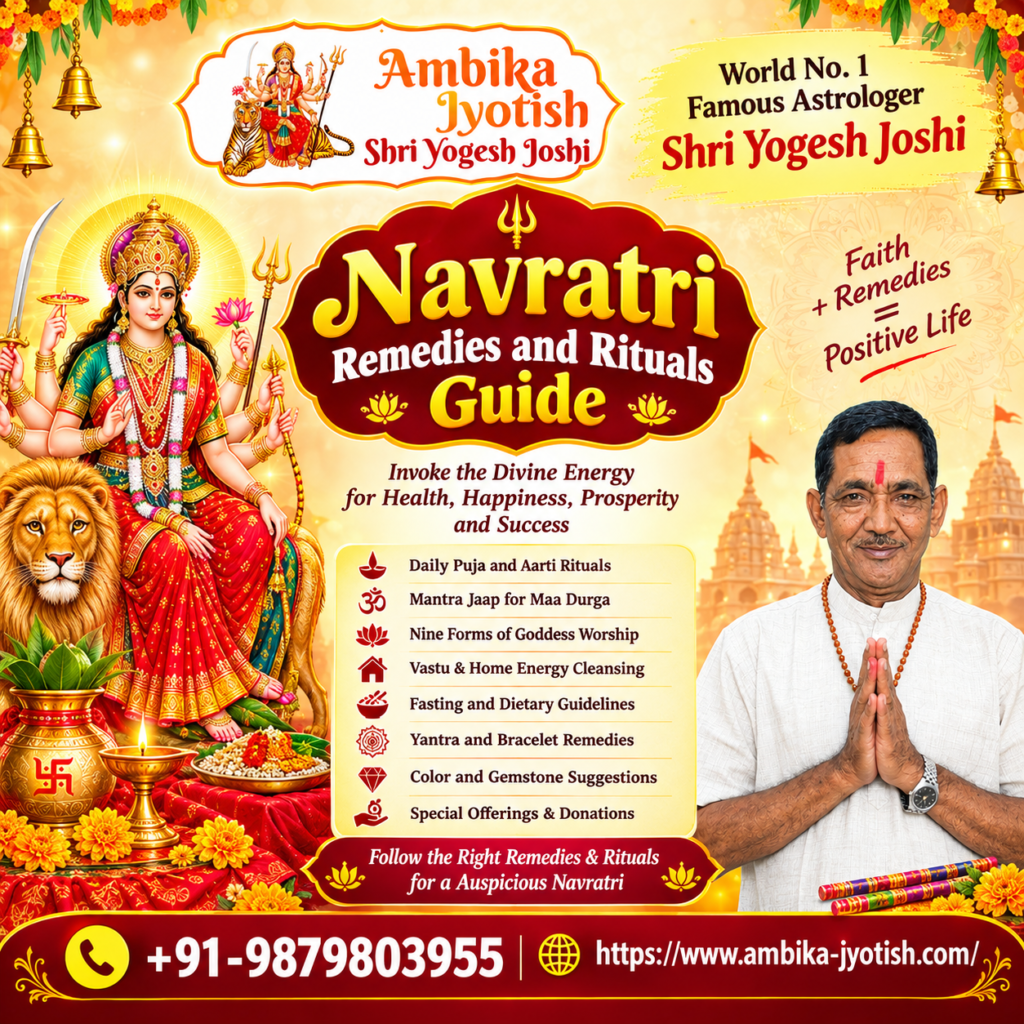
Explore powerful Navratri remedies and rituals for prosperity, peace, health, protection, and success. Follow traditional practices with devotion to seek Goddess Durga’s blessings and bring positive energy into your life.
Navratri is one of the most sacred and spiritually significant festivals in Hindu tradition. The nine-day festival is dedicated to the divine feminine energy, especially Goddess Durga and her various forms. Devotees observe Navratri through prayers, fasting, meditation, mantra chanting, temple visits, and traditional rituals to seek blessings for strength, happiness, protection, prosperity, and spiritual growth.
According to traditional beliefs, Navratri is considered an auspicious period for removing negativity and strengthening positive energy. At Ambika Jyotish, we believe that these sacred days can also be used for self-reflection, devotion, and adopting positive habits.
Here is a detailed guide to traditional Navratri remedies and rituals that you can follow during these nine auspicious days.
1. Begin Navratri with Kalash Sthapana
Kalash Sthapana, also known as Ghatasthapana, is traditionally performed at the beginning of Navratri. It symbolizes the invocation of divine energy and the beginning of the sacred nine-day worship.
Clean the puja area thoroughly and place a kalash according to your family tradition. The kalash may be decorated with auspicious symbols and surrounded by grains or other traditional items.
Perform the ritual with a calm mind and sincere devotion. If you are unfamiliar with the procedure, it is advisable to follow the customs practiced by your family or seek guidance from a knowledgeable priest.
2. Light a Diya Every Day
Lighting a diya during Navratri is a simple yet meaningful ritual. A diya represents divine light and is traditionally associated with removing darkness and negativity.
You can light a ghee or oil diya in front of Goddess Durga every morning and evening. Keep the worship area clean and peaceful.
While lighting the diya, offer a heartfelt prayer for your family’s well-being, peace, health, success, and protection.
3. Chant a Durga Mantra
Mantra chanting is an important part of Navratri worship. One simple mantra devotees can recite is:
“Om Dum Durgayai Namah.”
You may chant it 108 times each day or according to your personal routine. The purpose of mantra practice is to develop concentration and devotion rather than simply counting repetitions.
Regular chanting can become a peaceful daily practice during Navratri and can help create time for reflection and prayer.
4. Offer Red Flowers to Goddess Durga
Flowers are commonly offered during Hindu worship as a symbol of devotion and respect. Red flowers are traditionally associated with Goddess Durga.
During your daily puja, offer fresh flowers while praying sincerely. You can also offer fruits, sweets, or other traditional naivedya according to your family’s customs.
Remember that cleanliness, sincerity, and devotion are more important than expensive offerings.
5. Observe Fasting Mindfully
Many devotees observe a fast during Navratri. Fasting practices vary widely from person to person and according to regional and family traditions.
Some people eat fruits and specific fasting foods, while others observe a more restrictive fast. If you choose to fast, do so responsibly and according to your personal circumstances.
The spiritual purpose of fasting can be understood as an opportunity to practice discipline, moderation, and self-control. It should not become a reason to neglect your well-being.
6. Read Durga Saptashati or Devi Mahatmya
Devotees may read sacred texts associated with Goddess Durga during Navratri. The Durga Saptashati, also known as Devi Mahatmya, is especially significant in many traditions.
If reading the complete text is difficult, you can spend a few minutes each day listening to or reading devotional material about Goddess Durga.
The stories of the Goddess overcoming powerful forces are traditionally understood as reminders of the victory of righteousness, courage, and divine strength over negativity.
7. Perform Kanya Pujan
Kanya Pujan, also called Kanjak Puja in some regions, is traditionally performed toward the end of Navratri. Young girls are respectfully worshipped as manifestations of the Divine Mother.
Devotees may wash their feet, offer food, gifts, flowers, and seek their blessings according to local customs.
This ritual represents respect for feminine energy and innocence. It should always be performed respectfully and in accordance with family and community traditions.
8. Donate Food and Essential Items
Charity is another meaningful practice during Navratri. You can donate food, clothes, educational supplies, or other necessities to people who need assistance.
Feeding someone, supporting a charitable organization, or helping a family in need can be a practical expression of compassion.
At Ambika Jyotish, we encourage devotees to view spiritual practices not only as personal rituals but also as opportunities to develop kindness and gratitude.
9. Keep Your Home Clean and Peaceful
Cleanliness has traditionally been an important part of festival preparation. Before Navratri begins, clean your home and especially your puja space.
Avoid unnecessary clutter around the place where you worship. Keep the environment peaceful and devote some time each day to prayer or meditation.
A clean and organized environment can also help you maintain a calm mind and a disciplined routine throughout the festival.
10. Avoid Negative Thoughts and Actions
Navratri is an excellent opportunity for inner purification. Along with external rituals, devotees can consciously reduce anger, jealousy, excessive criticism, and unnecessary conflict.
Try to speak kindly, forgive where possible, and spend more time on constructive activities.
The spiritual significance of worshipping Goddess Durga is not limited to rituals. Her symbolism can inspire us to develop courage, discipline, compassion, and strength in everyday life.
11. Seek Personalized Astrological Guidance
Navratri is considered an auspicious time for spiritual practices, but every person’s circumstances are unique. In Vedic astrology, an individual’s birth chart may be examined to understand traditional planetary influences and recommend suitable remedies.
At Ambika Jyotish, personalized astrology consultations can help individuals explore traditional remedies based on their birth chart and specific concerns.
Whether your focus is career, relationships, finances, family matters, or personal growth, astrological guidance should be viewed as a source of reflection and traditional insight rather than a replacement for practical decision-making.
Navratri Remedies for Different Goals
Different devotees may approach Navratri with different intentions. For prosperity, you may focus on prayer, charity, gratitude, and responsible financial habits. For career growth, combine spiritual discipline with skill development and consistent effort. For family harmony, practice patience, respectful communication, and collective prayer.
For spiritual growth, dedicate more time to meditation, mantra chanting, reading devotional texts, and self-reflection.
No spiritual remedy can guarantee a particular material outcome. The value of these practices lies in faith, discipline, positive intention, and the habits they encourage.
Conclusion
Navratri is much more than a nine-day festival. It is an opportunity to reconnect with faith, discipline, family traditions, and the divine feminine energy represented by Goddess Durga.
From Kalash Sthapana and daily diya lighting to mantra chanting, fasting, charity, Kanya Pujan, and devotional reading, each ritual can bring greater meaning when performed with sincerity. Consult an experienced marriage problem solution astrologer for guidance on conflicts, misunderstandings, delays, separation, and compatibility issues. Vedic astrology offers personalized insights and traditional remedies to promote harmony, understanding, trust, and marital happiness.
At Ambika Jyotish, we believe that spiritual practices become more meaningful when devotion is combined with positive action. Use Navratri as a time to remove negativity, strengthen your determination, help others, and create a peaceful environment within yourself and your home.
May Goddess Durga bless you and your family with strength, protection, wisdom, happiness, prosperity, and peace. May these sacred nine days inspire you to move forward with faith and courage.